It is a foggy, drizzly morning in the Bluegrass. So unlike most of the mornings in this drought-stricken year. So unlike that morning whose stories always seem to include comment on the clearness of the blue sky.
I'm glad for the rain. I'm not ready for another clear sunny September 11th just yet. There is still too much hanging in the air, too many still crying from the ground for crisp autumn skies on this of all days.
I was too young to remember the deaths that punctuated life in the sixties, the "where were you when..." moments of that generation. But I will never forget the moment my country seemed to change forever.
I pray today for families lost, for killers and victims, for sponsors and targets. I pray for the redemption of forsaken souls, and the healing of broken hearts.
And I pray for my country. I was born here by accident of fate. She is what she is and we, her people are what we are. The debt I owe her, I did not take on, but it is mine nevertheless. It is the debt any child owes to the mother who gives it life and nourishment and a compass for finding right and wrong on life's highway.
My country is not always right and she is not always great, but she is mine. She has enemies, foreign and domestic against whom I am duty bound to protect her. Since she gave me life, honor requires that I give life to her as well by adding my strength and knowledge and judgment, such as they are, to those of my neighbors as we work together to make our country a stronger, wiser mother to her children and a better neighbor to the nations with whom we share this planet.
Such is the work of America's sons and daughters. It is work that does not end. It will not go away. But it will wait for a day. Today I pray for the lives unlived, the dreams undreamed and the promises unkept. I pray for the courage of those who worked to save, rescue and recover. I pray for all who were touched by what fell from the sky that morning.
In short, I pray for the world today. Dear God, please keep us in your mind and your heart this day and everyday. We want to live so well. Yet we can get so lost along the way. Be our strength in times of weakness, our courage in times of fear, our compassion in times of anger, and our mercy when all we desire is the blood of our enemies. Unless the Lord build our tower, vain is our labor. Lord deliver us from vanity, from meaninglessness. And please, most merciful, heavenly Father -- grant us your peace. All this I ask in the name and for the sake of the one whose spirit not even death could hold in the ground, your son, our savior, Jesus Christ.
Amen.
Tuesday, September 11, 2007


Monday, September 3, 2007
Review: Stanley Grenz - A Primer on Postmodernism
I participate in a small number of online communities. The one I have always found most rewarding is TMF – The Motley Fool.  I can’t recommend it highly enough. People from all over the world come together there to share knowledge about everything from finance and investing to home-brewed beer. Each of these boards generates a community of relationships – friends and rivals come there to be challenged and to grow.
Along with learning to manage my personal finances, I have been drawn to two religious communities on TMF – "Christian Fools" and “Faith in a Postmodern World.” I joined the latter community because I liked the people who built it, and I hoped to learn more about postmodernism in general, and Christian living in a postmodern context in particular.
Since my own education did not include an introduction to postmodernism, (or at least we didn’t call it that in Pennsyltucky in the ‘seventies,) I’ve always felt ignorant participating in the conversation. Over time, it became apparent that many others on the board were as vague in their understanding as I was. Many expressed an understandable reluctance to change a place of lively conversation into a forum for arid academic and philosophical esoterica. A friend recommended a resource to me, and I promised to read it and share some of the information and insights gleaned from the journey. What follows is the fulfillment of that promise.I hope you may find something useful in the course of our trip together.
Review: Stanley Grenz - A Primer on Postmodernism

Grenz, Stanley J., A Primer on Postmodernism, William B Eerdmans Publishing Co., Grand Rapids, 1996.
Stanley Grenz died in March of 2005. He was 54 years old. He left a legacy of bridge-building. His life's work reflects a ministry to the church - a mission to call her to carry the Gospel to the world of the present - not to let the news of Christ be lost in nostalgia for the way things used to be. He was passionate about helping the church to look through the lens of postmodernism, and to discover ways to minister to a generation that was raised while looking through this lens. His Primer has become a touchstone for anyone in the church seeking to carry on this missionary calling.
In the preface to Primer Grenz describes his objective:
Grenz' subject is not a simple one, and Primer is not always a simple read. In spite of the challenge of wrapping his arms around the principles of postmodernism, he was often successful in giving this old English major a glimpse of the often-nebulous face of this culture shaping movement.
Primer opens with a review of the article Grenz first published in the 1994 edition of Crux, a quarterly religious journal published by Regent College in Vancouver, BC. In "Star Trek and the Next Generation: Postmodernism and the Future of Evangelical Theology, Grenz proposes that contrasting the original series with its latter incarnation can offer insight into the differences between the modern and the postmodern points of view.
 Captain James Tiberius Kirk’s Enterprise reflected the modern world that produced it. The ship’s personnel were nearly all human. Their mission was “to boldly go where no man has gone before.” The use of the male gender here is not so much sexist as it is anthropocentric. The universe that Kirk’s starship explores has humankind at its center. The modern principle that “man is the measure of all things” reigns in Star Trek. The series emphasized diversity, but human diversity: explorers of multiple nationalities whose planetary civilization had advanced enough to enable them to work together to explore and discover the nature of “the final frontier.”
Kirk was the ultimate rugged individualist, trusting his gut, his experience, and his passionate nature far more than the counsel of small circle of advisors. Warrior, poet, orator, lover: he was a Renaissance man.
 The modern ideal is no swashbuckler. A strong individual whose approach to the universe was reasoned and dispassionate, the unfailingly logical Mr. Spock represented the modern emergence of science as the real problem-solver for humanity. In spite of the fiery courage of their Captain, the humans on the enterprise were ultimately able to pursue their mission thanks to the rational expertise of their half-Human/half-Vulcan Science Officer.
 Jean Luc Picard’s Next Generation Enterprise is a very different place that its predecessor. Their new mission – to boldly go where no one has gone before – is more than a nod to politically correctness. Man – humankind – is no longer the measure of all things on the Enterprise. The crew’s diversity now includes beings from all over the galaxy. Far beyond the familiar multi-cultural nature of Kirk’s crew, Picard leads an inter galactic team. At his side are a diverse team of advisors. Unlike Kirk, Picard’s second in command, Riker - his “Number One” - is present and prominent. The team includes the blind engineer, Geordi, the fierce Klingon security officer, Worf and the ship’s beautiful and motherly physician, Beverly Crusher. Instead of the super-human strength and intelligence of Spock, Picard has the assistance of the android, Data. Data’s character is very different than that of his Vulcan predecessor. Even though he is a machine, Data desires a more holistic understanding of what it means to be alive. Where Spock finds human emotional life to be an obstacle, or at best “fascinating,” Data actually wants to experience that life.
 Like Commander Riker,
 Counselor Troi has no real antecedent on the original crew. Her empathic abilities bring compassion and emotion to the forefront. Rather than being an obstacle to reason, emotion and feelings are considered to be integral parts of life on the new Enterprise.
Next Generation’s great villain is the Borg, a collective intelligence that robs beings of their emotional selves and integrates them into something that is not a community but an enormous machine of conquest. In the original series, the universe is an often mystifying, but rarely mystical place. Next Generation introduces the supernatural Q, a recurring omnipotent visitor from “the continuum”.
Grenz hypothesis is that Next Generation reflects the postmodern changes that began to occur in our culture in the decades between the launch of the original NBC series in 1966 and the generation that saw its release in first-run syndication in 1987. Our culture is moving away from one that idealizes reason, science, and individual achievement. Postmodernism leads us toward a more inclusive view of our existence - one that includes not only reason, but also intuition, emotion, and individual perceptions in the context of community.
The conclusion of Primer’s first chapter sums up what Grenz feels is the importance of the church considering postmodernism:
In this tribute to Granz, written on the blog Generations in Conversation soon after his death, the Star Trek comparison is described this way:
As the modern world changes, postmodern thinking will influence everything about our culture. As a people called to be in the world, but not of the world, Christians need to understand how to negotiate the postmodern landscape, even if it never becomes our true home.
Peace,
pennsy
Next: The Postmodern ethos and world view.
 I can’t recommend it highly enough. People from all over the world come together there to share knowledge about everything from finance and investing to home-brewed beer. Each of these boards generates a community of relationships – friends and rivals come there to be challenged and to grow.
Along with learning to manage my personal finances, I have been drawn to two religious communities on TMF – "Christian Fools" and “Faith in a Postmodern World.” I joined the latter community because I liked the people who built it, and I hoped to learn more about postmodernism in general, and Christian living in a postmodern context in particular.
Since my own education did not include an introduction to postmodernism, (or at least we didn’t call it that in Pennsyltucky in the ‘seventies,) I’ve always felt ignorant participating in the conversation. Over time, it became apparent that many others on the board were as vague in their understanding as I was. Many expressed an understandable reluctance to change a place of lively conversation into a forum for arid academic and philosophical esoterica. A friend recommended a resource to me, and I promised to read it and share some of the information and insights gleaned from the journey. What follows is the fulfillment of that promise.I hope you may find something useful in the course of our trip together.
Review: Stanley Grenz - A Primer on Postmodernism


Grenz, Stanley J., A Primer on Postmodernism, William B Eerdmans Publishing Co., Grand Rapids, 1996.
Stanley Grenz died in March of 2005. He was 54 years old. He left a legacy of bridge-building. His life's work reflects a ministry to the church - a mission to call her to carry the Gospel to the world of the present - not to let the news of Christ be lost in nostalgia for the way things used to be. He was passionate about helping the church to look through the lens of postmodernism, and to discover ways to minister to a generation that was raised while looking through this lens. His Primer has become a touchstone for anyone in the church seeking to carry on this missionary calling.

In the preface to Primer Grenz describes his objective:
…to assist students, church leaders, youth workers, and even colleagues in understanding the attitude or mind-set that is becoming increasingly prevalent in North American, especially (but not exclusively) on university campuses. (p ix)
Grenz' subject is not a simple one, and Primer is not always a simple read. In spite of the challenge of wrapping his arms around the principles of postmodernism, he was often successful in giving this old English major a glimpse of the often-nebulous face of this culture shaping movement.
Primer opens with a review of the article Grenz first published in the 1994 edition of Crux, a quarterly religious journal published by Regent College in Vancouver, BC. In "Star Trek and the Next Generation: Postmodernism and the Future of Evangelical Theology, Grenz proposes that contrasting the original series with its latter incarnation can offer insight into the differences between the modern and the postmodern points of view.
 Captain James Tiberius Kirk’s Enterprise reflected the modern world that produced it. The ship’s personnel were nearly all human. Their mission was “to boldly go where no man has gone before.” The use of the male gender here is not so much sexist as it is anthropocentric. The universe that Kirk’s starship explores has humankind at its center. The modern principle that “man is the measure of all things” reigns in Star Trek. The series emphasized diversity, but human diversity: explorers of multiple nationalities whose planetary civilization had advanced enough to enable them to work together to explore and discover the nature of “the final frontier.”
Kirk was the ultimate rugged individualist, trusting his gut, his experience, and his passionate nature far more than the counsel of small circle of advisors. Warrior, poet, orator, lover: he was a Renaissance man.
 The modern ideal is no swashbuckler. A strong individual whose approach to the universe was reasoned and dispassionate, the unfailingly logical Mr. Spock represented the modern emergence of science as the real problem-solver for humanity. In spite of the fiery courage of their Captain, the humans on the enterprise were ultimately able to pursue their mission thanks to the rational expertise of their half-Human/half-Vulcan Science Officer.
 Jean Luc Picard’s Next Generation Enterprise is a very different place that its predecessor. Their new mission – to boldly go where no one has gone before – is more than a nod to politically correctness. Man – humankind – is no longer the measure of all things on the Enterprise. The crew’s diversity now includes beings from all over the galaxy. Far beyond the familiar multi-cultural nature of Kirk’s crew, Picard leads an inter galactic team. At his side are a diverse team of advisors. Unlike Kirk, Picard’s second in command, Riker - his “Number One” - is present and prominent. The team includes the blind engineer, Geordi, the fierce Klingon security officer, Worf and the ship’s beautiful and motherly physician, Beverly Crusher. Instead of the super-human strength and intelligence of Spock, Picard has the assistance of the android, Data. Data’s character is very different than that of his Vulcan predecessor. Even though he is a machine, Data desires a more holistic understanding of what it means to be alive. Where Spock finds human emotional life to be an obstacle, or at best “fascinating,” Data actually wants to experience that life.
  Like Commander Riker,
 Next Generation’s great villain is the Borg, a collective intelligence that robs beings of their emotional selves and integrates them into something that is not a community but an enormous machine of conquest.
 In the original series, the universe is an often mystifying, but rarely mystical place. Next Generation introduces the supernatural Q, a recurring omnipotent visitor from “the continuum”.
Grenz hypothesis is that Next Generation reflects the postmodern changes that began to occur in our culture in the decades between the launch of the original NBC series in 1966 and the generation that saw its release in first-run syndication in 1987. Our culture is moving away from one that idealizes reason, science, and individual achievement. Postmodernism leads us toward a more inclusive view of our existence - one that includes not only reason, but also intuition, emotion, and individual perceptions in the context of community.
The conclusion of Primer’s first chapter sums up what Grenz feels is the importance of the church considering postmodernism:
We dare not fall into the trap of wistfully longing for a return to the early modernity that gave evangelicalism its birth, for we are called not to minister to the past, but to the contemporary context….
Postmodernism poses many dangers. Nevertheless, it would be ironic – indeed, it would be tragic – if evangelicals ended up as the last defenders of a now dying modernity. (p 10)
In this tribute to Granz, written on the blog Generations in Conversation soon after his death, the Star Trek comparison is described this way:
The first chapter gives us the beautiful metaphor for modernism and postmodernism - Star Trek as a series. The first series - boldness and certainty. The second series - humility, subtlety and uncertainty.
As the modern world changes, postmodern thinking will influence everything about our culture. As a people called to be in the world, but not of the world, Christians need to understand how to negotiate the postmodern landscape, even if it never becomes our true home.
Peace,
pennsy
Next: The Postmodern ethos and world view.
Sunday, May 27, 2007
Pentecost 2007
 Happy Birthday, old girl. Nearly 2000 years since that ordinary day when the most amazing things started happening in an obscure, troublesome corner of the Roman empire.
 The wind, the Spirit of the Lord - that same breath that moved over the face of the deep on the first day of creation - that wind filled their little room and tongues of flame appeared above their heads and a new creation was born.
Happy birthday.
 You've been through a lot, Mother Church. Wars and dictators. Plagues and earthquakes. Saints and madmen. You've gone through it. And by the grace of God, you've come through it. The cheeks aren't as smooth as they once were, and the hair is touched with gray, but the eyes still sparkle from time to time.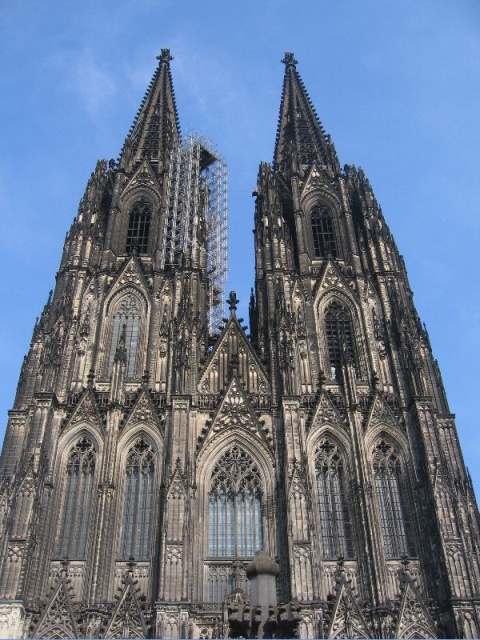
We've done a lot with the flame God gave us in that upper room. We've used it to light the darkness and to warm the chilly bones of your suffering children.
We've spread it over the face of the earth. We haven't always been careful as we ought to have been. We've mingled our own breath with the flame, hoping to make it burn brighter, spread faster. In our impatience, we've done harm in the world, and done harm to you.

But you're still here.
Like a mother who will not give up on her wayward children, you weep with us, discipline us, rejoice with us. You help us to welcome our babies and you help us to bury our dead.

Travel the world and you will find the church's flame burning. Shining like a beacon in the middle of a sin-sick city
 or glowing softly in the middle of a forest
 she stands - a stubborn reminder that we are not alone in this lonely universe. The church has many critics, and many of them are right. She is old and stubborn, set in her ways. She doesn't like to change, and is often hard on people who try to change her. She keeps too much, gives too little, holds on too tight, and lets go much too reluctantly.
 She's got a mean streak a mile wide and often seems more interested in obedience than reason. Much too much harm has been done - too many wounded hearts broken on her stone steps and wooden beams.
But she's still here.
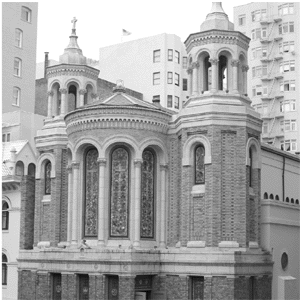
She has been my friend since I was a child. I remember the dark Presbyterian wood of my youth. The smell of lilac perfume and moth balls and Lifeboy as the hard working people in our church in Pittsburgh would crowd into the heavy pews with the hymnal racks and the hearing aids.
 Her dark stone walls reminded us that even on Sunday, life was hard work - hard as the mills whose stacks filled the air with the dark soot that colored our lives and stained her walls. Her tall square bell tower called us to church and called us to reflect upward - her finger pointing ever heavenward.
I remember the mystery of the communion cups, like a little shot glass in my grandmother's trembling fingers. She would drink when the minister said "This do..." and then place the empty cup in the wooden holder on the pew in front of her. Dad never came to church when I was little. I just thought it was something a man grew out of. There were a few grown men there, but mostly it was the women who greeted my mom and gramma. They would smile at me and talk while I tugged at my mother's sleeve, wanting only to go home and take off my church shoes. Women taught my Sunday school - Miss Margaret, Mrs Misplay, Mrs. Swango. The minister was a man, but it was pretty obvious to me who did the work and who did the sleeping in on Sunday mornings.
 When I was older, I joined the Boy Scouts and Dad became our Scoutmaster. At camp, we always had Sunday services and one of the other fathers would speak about honesty or helping people or one of the other scout values. All this made sense to me. These were grown men, but they weren't really talking about church stuff. They were talking about being good scouts and becoming good men. Then one weekend, Dad stood up. I was a little freaked and a little upset. I thought it was kind of hypocritical of him to talk in a chapel service when he didn't even go to church. He read to us from Psalms. "The heavens are telling the glory of God."
  Dad talked about the trees and the mountains of Western Pennsylvania where our families had grown up. This was where he found God. This was where his own father had shown him how to recognize a bird's song or track a deer through the autumn leaves. When Grampa died, the church stopped making sense to Dad. The rational, compassionate Father and Friend who was preached about from the big pulpit was no friend of my fathers. He had taken away his dad. There would be no more hunting trips. No more fishing in Canada. No more evenings at Forbes Field watching the Pirates and eating hot dogs. His father would not get the chance to watch me grow up. The God of church had seen to all that.
Here in the woods, it was a different story. Here my dad spoke a language I had never heard. He talked about a God whose fingers had scooped out the valleys and whose voice sang in the night. He saw the Creator's fingerprints all over the woods. God had provided fresh water, plants to provide shelter and save food. Even the stones for our fire ring were gifts from God over which we were not masters, but stewards. God had placed all this beauty in our care so that we might find rest from the smoke and the noise of the city. This was the place where the God my Dad knew lived.
Soon after that, Dad started coming to church. I grew up. He grew old and tired. When he died. I was not angry at God. My father had taught me to forgive, even my Creator's sins. We buried my father on a hill in the woods, far far from the city. He is with God.
The church and I have had our ups and downs. I am in awe of her most of the time. She has been through so much, meant so much, helped so many. The old tricks of the cathedral architects still take my breath away. Flying buttresses, soaring domes, rose windows, tiny side chapels. The church has been all these things, but so much more.
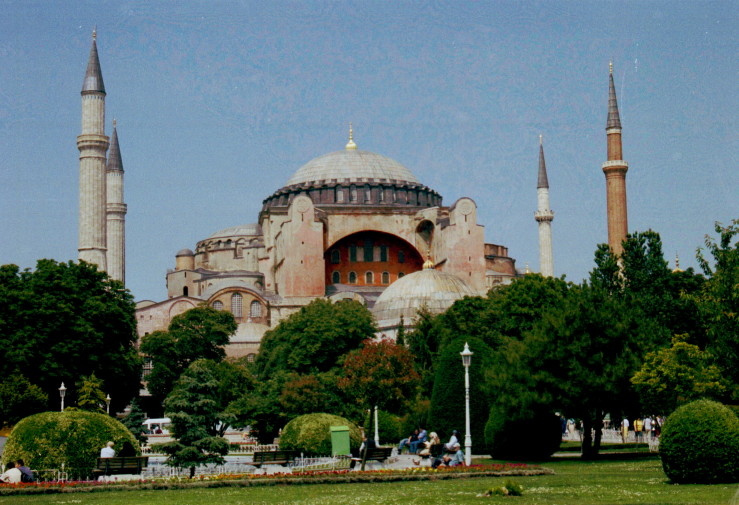

 She has been our flawed and beautiful guardian - our beautiful partner in the stewardship of creation. She is a glorious monster, a tender giant watching over us, yet reliant on us for her life.
 We are the church. That is true. A church is not a building, it is people. But the church is much more than we could ever be on our own. The church is people, but it is not only people. "Only people" is a room full of disciples who have said goodbye to Jesus twice in a few months, lost and a little confused about what it all meant and where they should go from here. "The church" is a street full of apostles speaking in strange languages to suspicious ears about the glory of a Creator who leaves fingerprints everywhere - even on human hearts. The church was born of the marriage between God and God's people. She is our mother AND our child.
Happy birthday, old girl. God bless you.
Amen.
Sunday, May 13, 2007
The Great Letting Go
 At the last supper, when Judas had gone out, Jesus said, "Now the Son of Man has been glorified, and God has been glorified in him. If God has been glorified in him, God will also glorify him in himself and will glorify him at once. Little children, I am with you only a little longer. You will look for me; and as I said to the Jews so now I say to you, 'Where I am going, you cannot come.' I give you a new commandment, that you love one another. Just as I have loved you, you also should love one another. By this everyone will know that you are my disciples, if you have love for one another."
 John 13:31-35
In this short Gospel lesson, Jesus speaks words his disciples are destined to understand only after his death. It is possible that he spoke for their sake of course, but it also seems to me that he spoke to his own heart which ached with grief at the loss of his friends. Jesus was about to begin his journey through The Way of Letting Go.
The Great Letting Go is a part of human life. Our birth is the primal example. We must leave – in fact we are driven out of the only existence we know. We lose the relationship that has kept us alive. We are thrust into a new world, one where the person we were is no more than a subconscious memory. We have no choice but to let go of the person we were, in order to become the person we will be.
 A mother must also travel this painful and confusing road. For nine months she has lived in relationship with someone she has never seen, but with whom she shares an intimacy that is completely unique in creation. She has willingly offered her body to be the home of a being who is not an invader or a parasite, but a new creature. She has changed with her child’s transformation from a single cell into a thinking, breathing person. From the beginning, she knows it is a relationship that is destined to end, this intimate hospitality of mother and unborn child. If her child is to live, a mother has to let it go.
 My first memory of The Great Letting Go was when my Grampa died. He had been a special friend to me, my mother’s Father. His angular country features were different from the round, Ukrainian faces I knew in my father’s family in the city. Grampa had a laugh that filled his little house like music. When I misbehaved, or did something dangerous outside, his anger could reach across a pasture like thunder. I remember the smell of his Chesterfields and the Captain Black as their smoke curled around the posts that held up the porch roof. I remember the tiny holes he would sometimes burn in his pants when an ember would accidentally fall from his straight, brown pipe. Those tiny holes began to grow more frequent after he became sick. They grew and spread like the tumors my mother said the doctor had seen in his X-rays. The weekend we went to visit and saw the burn on the arm of Grampa’s big chair in the living room, I knew that something was really wrong with my strong, tall laughing friend. We watched the light slowly fade from his eyes as the stairs became too difficult and the old oak dining room table was moves aside to make room for a hospital bed. Finally an ambulance brought him to the city, driving fast along The Great Letting Go. Finally, I came home one afternoon and my father’s mother, my city gramma was waiting for me. She sat me on her big rocking chair while she sat on the edge of the bed and explained to me that Grampa was dead. He had been a very sick man, but now he was no longer sick.
I had known tears before then - tears of frustration, of pain, of disappointment, fear, or anger - but that was the first time I remember weeping the tears of The Great Letting Go.
Those tears become part of our lives. A friend goes away. Our family moves to a new place. Summer vacation ends.
 Later we learn about love and its cost. We learn the joys of having a sweetheart and the pain of losing them. Our parent’s arguments (or their silence) finally tears them apart. We become “every other weekend” children of people who have let go of one another.
School days end, speeches are made. We dress in strange medieval costumes while people talk about exciting beginnings and possibilities. But in our hearts we know that what is really happening is the death of the life we have always known. We are traveling down the shadowy, unknown valleys of The Great Letting Go.
We will return to its winding way many times. There will be weddings and funerals. Children will become teenagers. Love nests will fill with little birds, then one day we look around and the nest willl be empty. Promotions will give us new colleagues and old ones will be left behind. Obituaries, alumni magazines, and late night phone calls will bring news of loved ones whose life journey is over. Lost opportunities at reunion or reconciliation become a part of our lives. Finally, the time comes for our own greatest letting go. Our strength fades, our minds cloud, our health abandons us, and our breath leaves us one last time – one last expiration – and we let go.
Christ’s incarnation means salvation for humankind – but what does it mean for God? One of the lessons of the Hebrew scripture is that God does not act unilaterally. We are in relationship with a God who acts in covenant. In giving, God takes. In taking, God gives. This is not paradox – it is a description of the relationship God desires with us. “You will be mine and I will be yours.”
 What does God get out of the agony of the incarnation? God learns what it means to let go. The physical torture is only part of the Passion of the Christ. There is also the pain of a person whose consciousness stretches back to the creation of the universe. Christ’s embrace is capable of gathering all of creation to himself, and yet now, having accepted the bondage of human, temporal existence, the creator of the universe has no choice but to let go.
Of home.
Of serenity.
Of a father’s courage.
Of a Mother’s embrace.
Of friends, disciples, students, and believers.
Of enemies, even. The ones who challenged his heart and sharpened his mind.
Of life itself.
One of the lessons of the incarnation for God is the experience of The Great Letting Go. In Jesus, God finally knows from the inside out what it means to truly lose and to grieve the loss. Standing at the grave of Lazarus, Jesus wept – but they were God’s tears.
The time of letting go is never far from us. Paul used to say that he had died to himself. Like a child being born, Paul had to let go of everything he had once believed to be true in order to become a new creation in Christ.
 Each of us encounters The Great Letting Go many times in our lives. We may face it with anticipation or anxiety or with dread or despair – but we will never face it alone. Jesus knows the way because he has traveled it himself. Our God chose to travel the way of letting go so that even in this, we might remain in covenant. Even at our times of greatest loss, we remain God’s people – God remains our God. A God who can both rejoice and weep with us throughout the journey of our lives.
 Christ’s example is our commandment and our blessing – live a life that can both embrace and let go. Put down what must be put down, and take up what must be taken up – be it a friend, a vocation, or a cross. Cling to nothing but God’s faithfulness.
And always love one another. This is Christ’s commandment. This is the vocation of a disciple. Love one another through the victories and the defeats, in strength and in weakness, in rejoicing and in mourning. Love one another in the holding, and love one in the letting go.
This is the way the world knows the “little children” of Christ. Not from their jewelry or their bumper stickers or the sign in their yard or the slogan on their sweat shirt. The world knows the children of God because they love one another.
May God grant that we might recognize that love in our own lives – that we might join with Christ in his great ministry, even as he faithfully joins with us in our Great Letting Go.
Amen
Pieta, Paula Rego, 2002.
All other images are from one of my favorite companies, Bridge Building Images. I hope you enjoy them.
Peace,
Pennsy
Sunday, April 29, 2007
Family Business
At that time the festival of the Dedication took place in Jerusalem. It was winter, and Jesus was walking in the temple, in the portico of Solomon. So the Jews gathered around him and said to him, "How long will you keep us in suspense? If you are the Messiah, tell us plainly." Jesus answered, "I have told you, and you do not believe. The works that I do in my Father's name testify to me; but you do not believe, because you do not belong to my sheep. My sheep hear my voice. I know them, and they follow me. I give them eternal life, and they will never perish. No one will snatch them out of my hand. What my Father has given me is greater than all else, and no one can snatch it out of the Father's hand. The Father and I are one."
John 10: 22-30
Those shepherds who saw a host in the heavens and went to Bethlehem to visit a babe wrapped in swaddling clothes could not have understood who the child was, not really. But even if they had, they could never have anticipated the important role they would play in the life and ministry of the one the angel called “Christ, the Lord.”
Many times in the Gospel narratives, Jesus portrays himself as a shepherd who loves his sheep – one who would die for them. Heroic self-sacrifice is part of a shepherd’s life, but there is much more.
The shepherd is always with the sheep. When they are born, when they learn to walk, when they grow into adulthood, breed, and give birth, the shepherd is there. When they fall ill, the shepherd heals them. When they are injured, he gives them comfort. When they are lost, the shepherd seeks them out and brings them home. When they sleep, the shepherd keeps watch over them and protects them. And when their life’s journey is over the shepherd is there, too. Even in death, they are not alone.
Whenever I have heard Jesus refer to the “works” that he does, I have always thought of the miracles: water and wine and walking on the sea and waking the dead – big things. But Jesus’ public ministry lasted three years. The miracles might sell a lot of Bibles, but they are a relatively rare part of his ministry. Most of the time, Jesus is doing much less dramatic works. He teaches. He listens. He comforts people in trouble. He tells riddles. He irritates what we used to call “the establishment.” A lot of what Jesus does, modern managers might refer to as “team building.” He develops a group of leaders who can continue his work when he is gone. Most of the time, Jesus did a lot of boring stuff that had nothing to do with quieting storms and healing the blind.
While the miracles are important, the low profile, day-to-day items on Jesus’ task list are just as powerful a testimony to who he is. Jesus did not spend most of his time doing miracles and garnering publicity. He spent his days quietly shaping the characters of the women and men who would carry his ministry out into the world. The ones who heard his voice and followed revealed themselves to be his sheep. After his death, they would become his “body” in the world. They would become the church.
And what would become of them?
In the seventh chapter of his Apocalypse, John describes a vision…

After this I looked, and there was a great multitude that no one could count, from every nation, from all tribes and peoples and languages, standing before the throne and before the Lamb, robed in white, with palm branches in their hands.
They cried out in a loud voice, saying, "Salvation belongs to our God who is seated on the throne, and to the Lamb!"
Revelation 7: 9,10
The language is important here, I think. This is not a gathering of tribes or a convention. These are not delegations from every state, all expressing their identities with foam rubber cowboy hats or buttons or signs on poles. John did not see a mosaic of independent groups – he had a much more radical vision. John saw “a multitude.” He saw a great sea of humans who had come from all nations and languages in order to join this body that “no one could count.”
Then one of the elders addressed me, saying, "Who are these, robed in white, and where have they come from?" I said to him, "Sir, you are the one that knows." Then he said to me, "These are they who have come out of the great ordeal; they have washed their robes and made them white in the blood of the Lamb.
Rev 7: 13, 14
John’s Revelation was written as a message of hope to a persecuted church. In parts of our world today, Christians are tortured and murdered for recreation or entertainment. In John’s time, this activity was not isolated in pockets of political conflagration – it was the official policy of the government that ruled what John understood to be the entire world. The church needed a message of hope. They needed to hear that Death, who seemed to rule this world as surely as Rome did, would not have the last word. They needed to know that their battered bodies and broken hearts would not be stained with grief forever. In John’s vision, they could find that hope. His portrait of the throne of heaven, is full of echoes from the Gospels. The multitude in clean white robes washed in the blood of the Lamb recall Jesus own baptism. The palms they are holding conjure images of Jesus triumphant entry into Jerusalem on a white colt. The illegal, despised, and persecuted early Christian church needed reassurance that what the Roman world seemed intent on destroying would not be destroyed. John’s letter from Patmos offered that reassurance.
The church in my country knows nothing about persecution. Politically polarized Americans who pretend to be threatened by their ideological antagonists speak blasphemy against the blood of the martyrs when we compare ourselves to them. Outside of extraordinary and rare circumstances, no American Christian is ever going to have to choose between faith and a tortured, humiliating death at the hands of people who hate everything that the church represents.
And yet, this multitude is not irrelevant to us. The message is not a dated artifact from another, ancient civilization. We may be safe from persecution, but “the great ordeal” remains. If nature abhors a vacuum, the devil hates one even more. If governments will not do his work for him, he can always find other agents to try to dismember the body of Christ. Our contemporary church’s ordeal moves from the inside out like cancer cells. Like her people, the church suffers from narcissism, addiction to substance, obesity, anxiety, depression, and the arrogance born of fear. Since feeding us to the lions no longer amuses our world, Satan has a thousand intricate ways of encouraging us to devour one another.
Each of us lives in what Islam calls jihad - not the perverted “holy war” of politicians and gangsters, but the spiritual struggle with the demons who torment us, wherever we live. We suffer casualties in that struggle, both as individuals and as the church. Hearts are broken. Faith is lost. Families are destroyed and life becomes an option to be chosen, not a gift to be treasured. Our ordeal cannot compare to the suffering of Christians in China or Sudan, but Satan can use it to destroy our faith just as surely as if we were being threatened by Pilate himself.
There are many ways to come through an ordeal, of course. You can run away. You can pretend it isn’t there, and just go about your business. Or you can look it straight in the eye and stay faithful. That sounds like the course of the multitude in white who have known hunger and thirst during lives without shelter from the weather or the elements. These are they who have chosen to answer the call of the Lamb who is also their shepherd. The people who gather at the throne of God will be those who were not frightened away from Jesus –not by the world, not by the devil, and not by their own fears and doubts. For the ones who come out of that ordeal, John’s promise remains intact…

[for] the Lamb at the center of the throne will be their shepherd,
and he will guide them to springs of the water of life,
and God will wipe away every tear from their eyes.
We have a savior who will not send us, but will guide us to the healing waters of life. We serve a creator whose own hands will caress our cheeks and wipe away all our tears. Guidance and healing; compassion and comfort: these are the “works” Jesus did in his life. This is the family business of God the Creator, the Redeemer, and the Sustainer.
This is the family business inherited by the church.
And now, it’s time to get back to business.
Amen.
Greek Shepherds is from the collection of the Johnstown Area Heritage Association
St John the Evangelist at Patmos, Hans Memling, 1479 from the Christian Art Gallery of Art History Archive.com
Want to learn more about today's persecuted church? try The Voice of the Martyrs.
The photo of The Falls of the Youghiogheny (thats "YOCK-a-gainey" for you non-pennsyltuckian speakers. Just "YOCK" if you've ever been dumped into it from a rubber raft) - in any case, the photo was pulled from visitUSA.com.
Peace,
Pennsy
John 10: 22-30
Those shepherds who saw a host in the heavens and went to Bethlehem to visit a babe wrapped in swaddling clothes could not have understood who the child was, not really. But even if they had, they could never have anticipated the important role they would play in the life and ministry of the one the angel called “Christ, the Lord.”
Many times in the Gospel narratives, Jesus portrays himself as a shepherd who loves his sheep – one who would die for them. Heroic self-sacrifice is part of a shepherd’s life, but there is much more.

The shepherd is always with the sheep. When they are born, when they learn to walk, when they grow into adulthood, breed, and give birth, the shepherd is there. When they fall ill, the shepherd heals them. When they are injured, he gives them comfort. When they are lost, the shepherd seeks them out and brings them home. When they sleep, the shepherd keeps watch over them and protects them. And when their life’s journey is over the shepherd is there, too. Even in death, they are not alone.
Whenever I have heard Jesus refer to the “works” that he does, I have always thought of the miracles: water and wine and walking on the sea and waking the dead – big things. But Jesus’ public ministry lasted three years. The miracles might sell a lot of Bibles, but they are a relatively rare part of his ministry. Most of the time, Jesus is doing much less dramatic works. He teaches. He listens. He comforts people in trouble. He tells riddles. He irritates what we used to call “the establishment.” A lot of what Jesus does, modern managers might refer to as “team building.” He develops a group of leaders who can continue his work when he is gone. Most of the time, Jesus did a lot of boring stuff that had nothing to do with quieting storms and healing the blind.
While the miracles are important, the low profile, day-to-day items on Jesus’ task list are just as powerful a testimony to who he is. Jesus did not spend most of his time doing miracles and garnering publicity. He spent his days quietly shaping the characters of the women and men who would carry his ministry out into the world. The ones who heard his voice and followed revealed themselves to be his sheep. After his death, they would become his “body” in the world. They would become the church.
And what would become of them?
In the seventh chapter of his Apocalypse, John describes a vision…

After this I looked, and there was a great multitude that no one could count, from every nation, from all tribes and peoples and languages, standing before the throne and before the Lamb, robed in white, with palm branches in their hands.
They cried out in a loud voice, saying, "Salvation belongs to our God who is seated on the throne, and to the Lamb!"
Revelation 7: 9,10
The language is important here, I think. This is not a gathering of tribes or a convention. These are not delegations from every state, all expressing their identities with foam rubber cowboy hats or buttons or signs on poles. John did not see a mosaic of independent groups – he had a much more radical vision. John saw “a multitude.” He saw a great sea of humans who had come from all nations and languages in order to join this body that “no one could count.”
Then one of the elders addressed me, saying, "Who are these, robed in white, and where have they come from?" I said to him, "Sir, you are the one that knows." Then he said to me, "These are they who have come out of the great ordeal; they have washed their robes and made them white in the blood of the Lamb.
Rev 7: 13, 14
John’s Revelation was written as a message of hope to a persecuted church. In parts of our world today, Christians are tortured and murdered for recreation or entertainment. In John’s time, this activity was not isolated in pockets of political conflagration – it was the official policy of the government that ruled what John understood to be the entire world. The church needed a message of hope. They needed to hear that Death, who seemed to rule this world as surely as Rome did, would not have the last word. They needed to know that their battered bodies and broken hearts would not be stained with grief forever. In John’s vision, they could find that hope. His portrait of the throne of heaven, is full of echoes from the Gospels. The multitude in clean white robes washed in the blood of the Lamb recall Jesus own baptism. The palms they are holding conjure images of Jesus triumphant entry into Jerusalem on a white colt. The illegal, despised, and persecuted early Christian church needed reassurance that what the Roman world seemed intent on destroying would not be destroyed. John’s letter from Patmos offered that reassurance.
The church in my country knows nothing about persecution. Politically polarized Americans who pretend to be threatened by their ideological antagonists speak blasphemy against the blood of the martyrs when we compare ourselves to them. Outside of extraordinary and rare circumstances, no American Christian is ever going to have to choose between faith and a tortured, humiliating death at the hands of people who hate everything that the church represents.
And yet, this multitude is not irrelevant to us. The message is not a dated artifact from another, ancient civilization. We may be safe from persecution, but “the great ordeal” remains. If nature abhors a vacuum, the devil hates one even more. If governments will not do his work for him, he can always find other agents to try to dismember the body of Christ. Our contemporary church’s ordeal moves from the inside out like cancer cells. Like her people, the church suffers from narcissism, addiction to substance, obesity, anxiety, depression, and the arrogance born of fear. Since feeding us to the lions no longer amuses our world, Satan has a thousand intricate ways of encouraging us to devour one another.
Each of us lives in what Islam calls jihad - not the perverted “holy war” of politicians and gangsters, but the spiritual struggle with the demons who torment us, wherever we live. We suffer casualties in that struggle, both as individuals and as the church. Hearts are broken. Faith is lost. Families are destroyed and life becomes an option to be chosen, not a gift to be treasured. Our ordeal cannot compare to the suffering of Christians in China or Sudan, but Satan can use it to destroy our faith just as surely as if we were being threatened by Pilate himself.
There are many ways to come through an ordeal, of course. You can run away. You can pretend it isn’t there, and just go about your business. Or you can look it straight in the eye and stay faithful. That sounds like the course of the multitude in white who have known hunger and thirst during lives without shelter from the weather or the elements. These are they who have chosen to answer the call of the Lamb who is also their shepherd. The people who gather at the throne of God will be those who were not frightened away from Jesus –not by the world, not by the devil, and not by their own fears and doubts. For the ones who come out of that ordeal, John’s promise remains intact…

[for] the Lamb at the center of the throne will be their shepherd,
and he will guide them to springs of the water of life,
and God will wipe away every tear from their eyes.
We have a savior who will not send us, but will guide us to the healing waters of life. We serve a creator whose own hands will caress our cheeks and wipe away all our tears. Guidance and healing; compassion and comfort: these are the “works” Jesus did in his life. This is the family business of God the Creator, the Redeemer, and the Sustainer.
This is the family business inherited by the church.
And now, it’s time to get back to business.
Amen.
Greek Shepherds is from the collection of the Johnstown Area Heritage Association
St John the Evangelist at Patmos, Hans Memling, 1479 from the Christian Art Gallery of Art History Archive.com
Want to learn more about today's persecuted church? try The Voice of the Martyrs.
The photo of The Falls of the Youghiogheny (thats "YOCK-a-gainey" for you non-pennsyltuckian speakers. Just "YOCK" if you've ever been dumped into it from a rubber raft) - in any case, the photo was pulled from visitUSA.com.
Peace,
Pennsy
Sunday, April 15, 2007
Wonderful... Dreadful...
 The Second Sunday in the Easter Season is traditionally the day when the church picks on Thomas. Sometimes, for a change of pace the sermon might be about how Thomas gets a bum rap with the whole “Doubting T” thing.
The appeal of this approach to today’s gospel is that you don’t have to deal with the difficulties of the first part of the lesson.
When it was evening on that day, the first day of the week, and the doors of the house where the disciples had met were locked for fear of the Jews, Jesus came and stood among them and said, "Peace be with you." 20 After he said this, he showed them his hands and his side. Then the disciples rejoiced when they saw the Lord. 21 Jesus said to them again, "Peace be with you. As the Father has sent me, so I send you." 22 When he had said this, he breathed on them and said to them, "Receive the Holy Spirit. 23 If you forgive the sins of any, they are forgiven them; if you retain the sins of any, they are retained."
John 20: 19-23
It was the end of the first day of the week – the first Easter day. There had been no chocolate bunnies, no hard-boiled eggs, and definitely no baked ham. There was plenty of fear, though. They had seen their rabbi arrested in the middle of the night, tortured, and executed. They had seen the public sentiment toward him turn on a dime as easily as a contemporary TV audience picks a new favorite reality show. Their bellies were full of the bitterness of their own betrayals. Their friend Judas was dead – Judas, whose sin each of them had mirrored in silence or denial. The long Sabbath had been spent in terrified anticipation. They were known throughout the city. Jesus’ persecutors certainly knew who they were. It was just a matter of time before each of them would be roused from sleep, and led one by one off to prison or worse.
On the morning after the Sabbath the knock came but it was not a Roman patrol. It was the women returning from the tomb with a crazy story. A few of the men ran to confirm what the women had said. They confirmed the worst. Jesus’ body was not there. The stories of angels and mysterious strangers in the garden were apparently not told or else not believed because they all returned to the locked upper room and spent the day in fear. Word on the street was that some lunatic had stolen Jesus’ body. The disciples had no doubts about who the authorities would blame for the crime. They were dead men locked in the upper room, just as surely as Jesus had been when they sealed him in his grave.
 John’s gospel reports the next events with a strangely cool, clinical eye. He merely reports facts with none of the commentary we might expect from Matthew and none of the dramatic flare that characterizes Luke. There is no wind, no flash of light, no walking through walls. Jesus simply “…came and stood among them and said. “Peace be with you.” He showed them his hands and feet and the mortal wound in his side. John tells us that only then did their fear subside and they rejoiced. (So you see Thomas wasn’t the only one who needed proof before he could believe.)
The next thing that happened was truly extraordinary and very difficult to preach about indeed. Everyone knows Luke’s cinematic story of Pentecost – the upper room, the wind, tongues of flame, preaching in strange languages, 3000 converts. John’s story of Pentecost is very different. It does not begin with special effects, but with the joyful disciples and the risen Christ repeating his blessing on them – “Peace be with you.” He then pronounces the ten words that created the religion we know as Christianity. “As the father has sent me, so I send you.” With than brief pronouncement the disciples were transformed from followers into leaders. Once Jesus had traveled to their boats and work places and their homes and said “Come.” Now he said “Go.” They were no longer Disciples of Jesus – they were Apostles of Christ.
Jesus then breathed on them, just as God had breathed life into the mud and given life to Adam. Jesus breathed his Holy Spirit into them and gave them the wonderful, dreadful responsibility for carrying on his ministry, “If you forgive the sins of any, they are forgiven them; if you retain the sins of any, they are retained.”Jesus had proclaimed forgiveness during his earthly life by the power of the Holy Spirit. Now he had given that responsibility to the Apostles.
The responsibility is wonderful because it allows the church to offer the peace of forgiveness to the repentant. It is dreadful because it commands the church to hold the unrepentant accountable for their actions. We do not have the authority to forgive – that belongs only to God. The authority we have is to bear witness to God’s forgiveness through the suffering and resurrection of Jesus. What we may not do is bear false witness to the unrepentant by proclaiming a forgiveness God does not grant. The sinner who will not release sins chains can never be set free by the pronouncement of the church. If a man or woman desires to remain a slave to their own sin, God will not force them to repent, and the church may not deceive them by claiming that God has done so.
In spite of all our most fervent prayers and best hopes, Jesus warns that in our ministry we will encounter some folks whose conversion we must simply leave to God. No heart can receive the peace of Christ until it has been softened or even broken by sin’s burden and God’s grace.
In John’s simple rendering of the day of Pentecost, Jesus reminds us that we are to walk humbly, just as he did. We are to tell the Good News to all who will hear it not only with our words, but also with our lives. We can offer the blessing of Christ’s peace as we rejoice with other sinners who have chosen to lay their sins on the altar of God’s love.
We can do all these things, but we cannot change people’s hearts.
 My wife once worked for a veterinarian. One of the painful realities of animal medicine is euthanasia. Sometimes an animal is beyond the help of the doctor’s art. The only options are to let them suffer or to put them down. For the compassionate people who do this kind of work every day, that choice takes a toll on the heart. Mrs. P had worked and grieved for many years before coming to this epiphany – you can’t save them all, but you can love them all. When one of our fellow creatures is sick with disease, we may not be able to deliver them from their illness, but we can still offer them compassion and loving-kindness until their suffering is over. That is a gift we can always give.
Likewise, when one of our fellow creatures is sick with sin, we cannot deliver them with all our art and science. But thanks to the spirit of Christ in us, we can offer them compassion and mercy until God relieves them of their burden. This is the authority given to the Apostles. This is the ministry of the church. If we are to take up Christ’s mission, we are free to rejoice with the redeemed and grieve for the lost, but in imitation of our Savior we must love them all – even the Doubting Thomases.
But his story is another subject for another day. Maybe next year.
Amen
Illustrations in this post are the work of the Swiss artist Corrine Vonaesch.
Sunday, April 8, 2007
Dead Among the Living?
 But on the first day of the week, at early dawn, they came to the tomb, taking the spices that they had prepared. They found the stone rolled away from the tomb, but when they went in, they did not find the body. While they were perplexed about this, suddenly two men in dazzling clothes stood beside them. The women were terrified and bowed their faces to the ground, but the men said to them, "Why do you look for the living among the dead? He is not here, but has risen.”
Luke 24: 1-5
Easter has always seemed to me to be the Christian High Holy Day. In a culture determined to leave no stone unsold, Easter has stubbornly resisted the commercial chains that bind Yuletide like Marley’s ghost. Bunnies, chocolate, a fancy hat here and there – pretty tame stuff when compared to Halloween, let alone Christmas.
So I have always felt Easter is a day to be taken seriously. Pope Gregory may have balanced time on the fulcrum of the nativity, but in my mind, history didn’t really turn the corner until the morning Luke describes in his gospel.
Everybody knows the story. It’s early morning. The handful of Jesus’ disciples who cannot hide their identities are hiding their faces. A small party of women makes its way to the Garden to complete Jesus’ burial preparations after his hasty entombment before the Sabbath. The last thing anyone expects is to find the door open and the chamber empty.
Each gospel tells the next part in a little different way. An angel appears. A mysterious gardener speaks. For Luke, it is this pair of men in dazzling clothes. Different renderings, but one common thread – no one on that Sunday morning, not even the people who loved him best, expected to find Jesus anywhere other than in that stone hole in the earth. No one knew Jesus better than they. These men and women had walked with Jesus, fished with him, eaten with him, and slept by his side under the desert stars. They accompanied his triumphant entry into Jerusalem and his agonized last steps to Golgotha.
If anyone on earth could make such a claim, these people were the experts. They knew what Jesus was all about and they knew exactly where to find him.
And the experts were wrong.
Why do you look for the living among the dead?”

A person would have to be crazy to do such a thing. Yet that is just what we do when we seek Christ. We read books. We sing songs. We go to lectures and sermons where experts quote other experts. We pray old prayers. We kneel in old buildings. We run through the maze of 2000 years of traditions, rolling away stones, looking for the secret place where the body of Christ is hidden.
He is not here, but has risen.
In John’s Easter story, Jesus warns Mary, “Do not hold on to me,” yet the church clings to the Jesus we think we know, even as the living Christ rolls away the stone door of our imagination and walks out to do his work in the world. We are like a child who runs with a fist full of sugar, only to find his palm sticky and empty when he finally opens it again.
We seek the living Jesus among the dead when we cling to our opinions as if they were God's truth.
We seek the living among the dead when church is the only place where we “feel close to God.”
We seek the living among the dead when we pass up the chance to visit a sick friend so we can rush home to pray for her.
The living Christ will not stay in the cool white tomb where we can roll away the stone when we want a little visit with Jesus. He is not there.
Christ is alive and well.
 He is weeping with the wife who can’t stop drinking and the husband who can’t stop cheating. He starves with the refugee and shivers with the homeless. He wakes sweating in fear next to the prisoner on death row. He bends his knee to scrub public bathrooms. He knocks at my door, or comes to me on the street, begging for the money that I refuse because I know it will only go to buy more beer. He lives with the sex offender down the street who dares not answer his door for fear of being evicted again. He stays awake with the child who dreads the creaking of floorboards and footsteps in the night. Jesus is comforting the dying. He is strengthening the weary. He is giving hope to the hopeless in every home, workplace, village, and web site on earth.
 And yet I go looking for him in tradition and nostalgia.
He is not here, but has risen.
There is a lot to be said for Easter Tradition. Grandma in her lavender dress. Grampa getting up early to shine his church shoes. Mom helping us to dye eggs. Dad teaching me to tie my tie. But our memories – good or bad – are not alive. They are the dead skin life sheds like a snake in the sun.
 They give us comfort by reminding us of what once was, but they cannot replace the challenge of living with what is. Too often we look at life like those confused women staring dumbly into an empty tomb, searching for the living God who has better things to do than stay dead.
 The long darkness of Lent is past. The light of the Easter Season is upon us. God forbid we should lose the one by clinging to the other. God grant us the courage to open our hands to share the sweetness of the love we have received so freely.
God bless the church and all creation on this Holy Feast of the Resurrection of our Lord.
Alleluia!
Amen!
Saturday, April 7, 2007
The Second Day
Lift up your heads, O gates!
and be lifted up, O ancient doors!
that the King of glory may come in.
Psalm 24:7
Holy Saturday may be the strangest day of the church year.
It is invisible.
Thursday evening begins what is known in the liturgy as the Sacred Triduum - the holy three days. The feast begins with Maundy Thursday, followed by Good Friday, and concludes with the Great Vigil of Easter. Saturday is as quiet as the empty tomb. There is a brief liturgy for the morning, slipped in like an asterisk.
There is an ancient tradition about this day, but in our damnation-shy culture, we have soft pedaled it into silence. Mysterious reference is made to this tradition in the Apostle's Creed.
He was crucified, died and was buried. He descended into hell.When I asked my parents about this unlikely phrase, they explained to me that in Greek, the word hades also meant a grave, so the creed was just affirming that Jesus spend a day in a tomb. This interpretation is so prevalent that in many parts of the contemporary church, the phrase has been altered to "He descended to the dead." He went where dead people go. He was buried.
John Calvin, who had no modern scruples about Hell interpreted the tradition another way. To him, Christ's descent into Hell was the spiritual completion of his fleshly passion. Jesus' redemptive suffering continued after his earthly death when his spirit, forsaken by the father, descended to experience the tortures of the damned in Hell. In Calvin's eyes, this made the price of redemption all the more precious and elevated Christ's sacrifice to a cosmic scale.
The apocryphal Gospel of Nicodemus (aka The Acts of Pilate) proposed another explanation - one that has been embraced by the church for centuries. The Gospel of Nicodemus records the testimony of three men raised from the dead who came to Jerusalem to bear witness:
We then were in Hades, with all who had fallen asleep since the beginning of the world. And at the hour of midnight there rose a light as if of the sun, and shone into these dark regions; and we were all lighted up, and saw each other. And straightway our father Abraham was united with the patriarchs and the prophets, and at the same time they were filled with joy, and said to each other: This light is from a great source of light. The prophet Hesaias, who was there present, said: This light is from the Father, and from the Son, and from the Holy Spirit; about whom I prophesied when yet alive, saying, The land of Zabulon, and the land of Nephthalim, the people that sat in darkness, have seen a great light.This is not the Hades my father told me about. These souls were with the damned in Hell. With nothing but their own righteousness to commend them, they could not enter communion with God in Heaven. They had died without the redeeming blood of Christ.

Many artists have taken up this theme.Fra Angelico shows the Devil crushed under the broken down gates of Hell where Christ has flung them. Jesus' outstretched arm extends deliverance the the faithful dead. Traditionally Adam and John the Baptist are first in line.

Pieter Huys renders the "Harrowing of Hell" on a grand scale. In a graphic hell-scape reminiscent of Hieronymus Bosch, Huys pictures the light of Christ piercing the darkness of Hell where some are redeemed, some are past hope, and some tortured souls cannot bear to even look upon the savior as he approaches.
Some of my favorite interpretations of the "Harrowing" tradition are those of the great German engraver, Albrecht Durer.
 One is startled by their intimacy. Here it is the demons who are tortured by Christ's holy presence. The redeemed stand triumphant, pulled from the mouth of hell by a savior who is as much action hero as spiritual deliverer.
Durer's Christ bears the banner of a victorious warrior, reclaiming Hell's hostages to lead them home. Adam, Eve, and the Patriarchs have the look of people shocked by their own liberation, while the Baptist appears to be explaining who and what this man Jesus is, even as he did in life.
I find the etching dated 1512 to be the most beautiful of all.
 The violence of the destruction of Hell's gates is evident as they lie smoldering, consumed by Hell's own fire. Demons cower helplessly as Eve gazes lovingly at Adam, while the first man watches in amazement as the goat skin clad Baptist, his hands clenched in prayerful gratitude is lifted by his wrists out of the fire and into the light.
 What happened on that silent Second Day? Certainly Jesus' body spent it in the hades of Joseph's tomb. It is difficult to argue with Calvin's interpretation. It is carefully reasoned and theologically unassailable.
Still, the "Harrowing" is the most firmly rooted in tradition. The image of Christ reaching his powerful arm and lifting the faithful out of the fires of Hell is inspiring for two reasons.
First, it satisfies our sense of Justice. It is unimaginable that God would allow good people to suffer forever because of their ignorance of Jesus redeeming death and resurrection. Second, it assures us that there is no depth to which we can sink that is beyond the saving grasp of Christ. Not even the gates of Hell can separate us from the God who loves us and longs for our redemption.
It is Holy Saturday - the invisible holy day. The Lenten fast is not yet complete. The resurrection is not yet accomplished.
But in the silence, God's saving work through Christ has already begun.
Thanks be to God.
Amen
Thursday, April 5, 2007
Silence is All

It is finished
The last word spoken
The last drop bled out
Jeers
Sobs
Now memories on that bloody hill
Filthy battle ground where
No matter the courage of the hero
The Victor
Is always
the
same
He amazed me
Giving me away
Like a favorite toy
She is yours/you are his
And the man
Barely more than a boy
Shamed me with his tears

Mine, so long dried out
Used up to water the roots of a promise
The once tender shoot
Broken and brown
Trodden into the mud and the spit and the sweat
Even the man/boy was empty now
Standing silently by
As they untangled the empty bag where my son had lived
From the thorny branch where the wind had blown him
Pierced him through
Held him fast
Everything had been arranged before hand
Bribes paid
Arrangements
The Man brought his people and they carried the husk
Empty
To a stranger's grave
Empty
Where they laid my boy

Troublesome
Beautiful
boy
The voice had said
Salvation
called me
blessed
Poor Joseph.
His eyes burned with courage and fear
that night
when he told me
He would stay
we crossed the world a hundred times
the four
Man Boy Woman Donkey
tiny boats thrown about
by the storms of kings
Nazareth
Bethlehem
Jerusalem
Egypt
always returning
but never home
never quite home again

lost him in the temple
lost
wandering the city like a madwoman
a boy?
Have I seen a boy?
Look around you woman.
Can you count all the boys in Jerusalem today?
found him
where he should have been
Where he loved to be
Joseph
silently working
hard tired hands aching
swollen
His great chest rising and falling in his sleep
then falling
and rising
no more
It is time,
I would tell him
A mother knows
I will know
He would answer

Now we both
know
They did their best,
but the filth remains
the blood
the soil
soaking through the linen
I can see his face
through the linen
why
why did you do
all
this
?
The boy/man touches my arm
time to put out the lamp
time to step out into the night air
if there is any
While they roll the stone into place
The only sound that ripples in the night
even the wind is
silent
then they go
eyes lowered
touch
nod
nothing left to say.
the man/boy waits
my new boy indulging his new mother
I am
so very
alone.
My heart is so full that it wants to scream
but silence
silence
silence
is all
I turn from the tomb
He offers his hand
I take it
should I believe?
or is he another man sent by God
to break my heart?
I want to hear the voice again.
My husband
My son
My angel
but no more voices
not for me
his words shot through me like an arrow
"It is finished"
so it is
no more songs from the handmaid of the lord
silence
silence
silence
is all
oh my beautiful child, my boy, my gentle gentle son
what would i give to hear your voice again
but he has forsaken
both of us
tonight the sword has pierced my heart
but death is not
merciful
to mothers
You have the silence of the tomb
the peace of the grave
the end of the pain
I am left alone
in the silence
the silence
the silence
Do This in Rememberance
Maundy Thursday
Therefore, my dear friends, flee from the worship of idols. I speak as to sensible people; judge for yourselves what I say. The cup of blessing that we bless, is it not a sharing in the blood of Christ? The bread that we break, is it not a sharing in the body of Christ? Because there is one bread, we who are many are one body, for we all partake of the one bread.
1 Corinthians 10: 14-17
Your body, broken for me?
It is too much, Lord. Too cruel. Too insane. I am not worth your suffering. Why not just let me go? Leave me to my fate and look after your faithful people, the ones who have not broken your heart with their stupidity and selfishness and arrogance and ingratitude? If this is what it takes to save my life, let me die. How could I live, knowing what it cost you?
And the Lord said…
 “It is not for you to decide who is worthy and who is not. I have chosen whom I have chosen and paid what I have paid for my Father’s glory. What has been broken, has been broken in hate and fear. But what has been laid down on the altar was laid down in love and in hope. The Creator has offered a sacrifice to the creature – not to worship, but to teach you how to love the imperfect in yourself and in all my beloved children. In the breaking of the bread, remember that I was willingly broken for you. To bring you home.
Go and do likewise, in remembrance of me."
Most merciful God, as we begin this most holy of seasons, grant us the vision to see your broken heart at the center of the Eucharist. A heart broken by our own sin – but a heart you allowed us to break, so that we your children might enter and dwell in it forever.
Amen
Therefore, my dear friends, flee from the worship of idols. I speak as to sensible people; judge for yourselves what I say. The cup of blessing that we bless, is it not a sharing in the blood of Christ? The bread that we break, is it not a sharing in the body of Christ? Because there is one bread, we who are many are one body, for we all partake of the one bread.
1 Corinthians 10: 14-17
Your body, broken for me?
It is too much, Lord. Too cruel. Too insane. I am not worth your suffering. Why not just let me go? Leave me to my fate and look after your faithful people, the ones who have not broken your heart with their stupidity and selfishness and arrogance and ingratitude? If this is what it takes to save my life, let me die. How could I live, knowing what it cost you?
And the Lord said…
 “It is not for you to decide who is worthy and who is not. I have chosen whom I have chosen and paid what I have paid for my Father’s glory. What has been broken, has been broken in hate and fear. But what has been laid down on the altar was laid down in love and in hope. The Creator has offered a sacrifice to the creature – not to worship, but to teach you how to love the imperfect in yourself and in all my beloved children. In the breaking of the bread, remember that I was willingly broken for you. To bring you home.
Go and do likewise, in remembrance of me."
Most merciful God, as we begin this most holy of seasons, grant us the vision to see your broken heart at the center of the Eucharist. A heart broken by our own sin – but a heart you allowed us to break, so that we your children might enter and dwell in it forever.
Amen
Wednesday, April 4, 2007
The Judgment of this World
Wednesday of Holy week
‘Now my soul is troubled. And what should I say—“Father, save me from this hour”? No, it is for this reason that I have come to this hour. Father, glorify your name.’ Then a voice came from heaven, ‘I have glorified it, and I will glorify it again.’ The crowd standing there heard it and said that it was thunder. Others said, ‘An angel has spoken to him.’ Jesus answered, ‘This voice has come for your sake, not for mine. Now is the judgment of this world; now the ruler of this world will be driven out. And I, when I am lifted up from the earth, will draw all people to myself.’ He said this to indicate the kind of death he was to die. The crowd answered him, ‘We have heard from the law that the Messiah remains for ever. How can you say that the Son of Man must be lifted up? Who is this Son of Man?’ Jesus said to them, ‘The light is with you for a little longer. Walk while you have the light, so that the darkness may not overtake you. If you walk in the darkness, you do not know where you are going. While you have the light, believe in the light, so that you may become children of light.’
After Jesus had said this, he departed and hid from them.
John 12:27-36
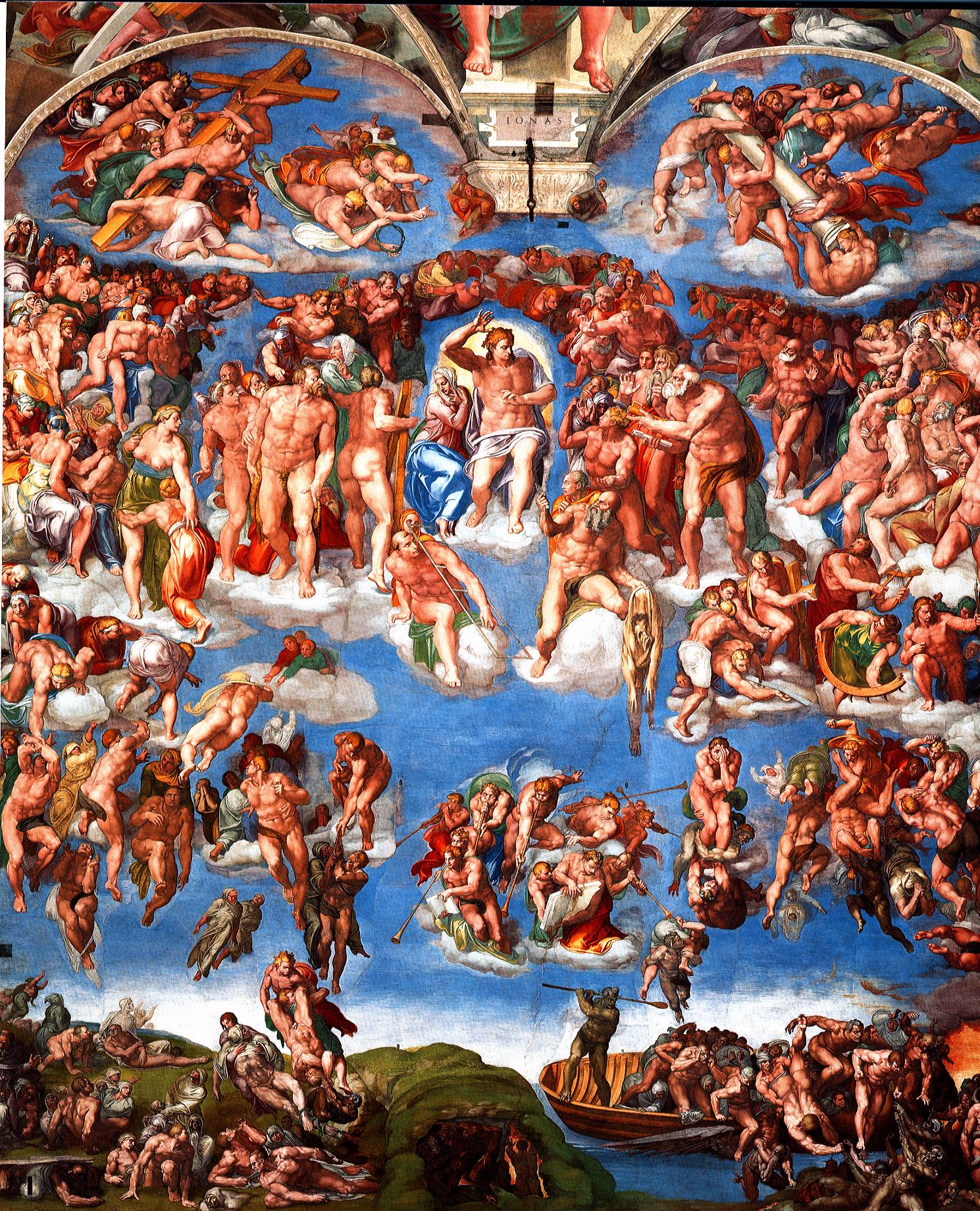 When we think of judgment we are used to thinking of images like the ones Michelangelo conjured – tortured souls filled with dread as they await the word that will cast them into the lake of fire. At the center of the terrible scene sits Christ, his mother at his side. One hand is raised over his head menacingly as he prepares to speak damnation. The other is held across his chest in an almost defensive posture. His body seems to recoil at the presence of those he is about to condemn as if he cannot bear them—or perhaps it is that he cannot bear to think of the fate they have chosen.
But there is a judgment that does not wait for the end of time. Our fallen world lives each day under judgment – not one that is proclaimed by Christ, but one that we choose for ourselves. Our gift of free will allows us to choose life. We are free to live as “children of the light.” As creatures made in the image of God, we have the capacity to point our will toward our creator.
There is another direction toward which we can orient our compass. We are also free to choose “the ruler of this world”. We are free to choose our own damnation by serving the creature rather than the creator. What did Jesus mean by the phrase “the ruler of this world?” Maybe he meant Caesar. He certainly ruled the world in which Jesus lived as much as anyone. Maybe he meant the Devil. Satan is often called the ruler of this world – the one who prowls like a lion looking for souls to devour. But I think the answer is much closer than that.
Humankind has been given dominion over creation. We have the freedom and the power to shape our world in ways Jesus could not have imagined in his father’s workshop. We are the ones who choose whom to serve, whom to deny, whom to love, whom to betray. We men and women are the rulers of this world, but only for a time. Our judgment is the accounting for our stewardship of the world with which we have been entrusted.
This judgment does not wait for Christ to burst through the clouds – it is a part of the fabric of creation itself. Humankind was created to live in Eden, but our world is no garden. We kill one another, starve one another, strangle whole nations with debts they can never pay, infect one another with diseases we can never cure. Our worship of ourselves – the rulers of this world – creates imbalance in creation. The universe itself is out of joint when the creature does not submit to the creator. Faced with so cosmic a calamity, no creature has the power to set things right again. Only the intervention of the one who spoke the cosmos into existence can do that.
And tomorrow, the church will remember the three days that gave the rulers of this world the chance to set things right again. We remember the night that the Word who was with God and who was God became flesh. We remember how he grew into a man, a friend, a teacher. We remember how he gave himself into the hands of the rulers of this world and how they tried to destroy him with whips and nails and vinegar.
And we remember how on the third day, Christ Jesus defeated even the grave, raised his hand and sent death itself into the fiery pit, snatching away its sting forever.
Our judgment is all around us. Everywhere we look in our broken world, we see evidence of a universe out of joint. Creation seems to be at war with itself.
In spite of all this, we have reason to hope. We need not choose damnation. We need not stumble in the darkness. Our God has given us the freedom to choose. We can believe that sound in the night to be thunder. We can call it the voice of a magical creature. Or we can recognize it for what it is – the echoes of the glory of God as the Holy Spirit sets about the long work of transforming and perfecting a creation that has lost its way.
Tomorrow, Maundy Thursday we will break bread in remembrance.
Tonight, may God grant that we remember why and for whose sake the “bread” was broken in the first place.
Amen
Subscribe to:
Posts (Atom)